Accessible Hot Wheels Cars for the Blind: Fun, Sensory Play Ideas

A toy car does not need bright paint or tiny printed flames to be exciting. For a blind or low-vision child, the fun can come from the weight of the car in the hand, the spin of the wheels, the sound it makes on a track, and the story built around it.
Hot Wheels cars are small, sturdy, affordable, and easy to find in many U.S. stores. They are also highly visual by design. That means blind and low-vision players may miss some of the details that sighted collectors talk about, such as paint color, graphics, or model names printed in small type.
The good news is that the cars can still become rich sensory toys. With a few thoughtful choices and simple adaptations, accessible Hot Wheels cars for the blind can support pretend play, sorting, racing, storytelling, and hands-on exploration.
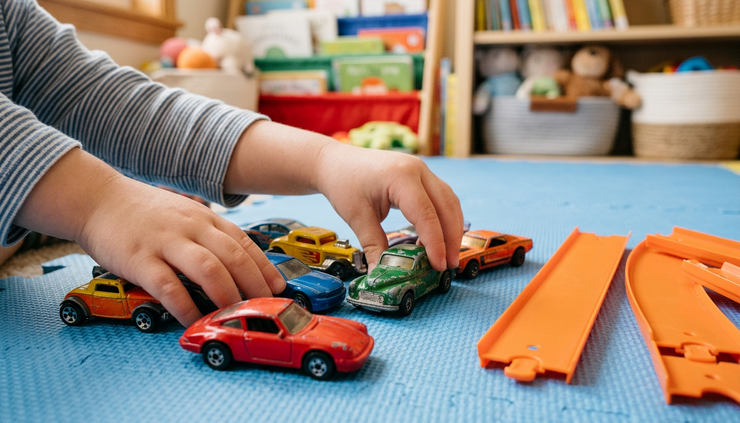
Start with the parts of play that do not depend on sight
A Hot Wheels car has many features that can be explored by touch and sound. Some cars are smooth and low. Others have large tires, raised spoilers, open truck beds, roof racks, or chunky shapes. Those differences give players a way to recognize cars without needing to see paint or graphics.
A good accessible car has at least one clear tactile feature. That might be:
Big rear wheels
A raised engine
A long truck bed
A tall roof
A low race car shape
A textured body
A spoiler that is easy to feel
Wheels that spin smoothly and loudly
The more distinct the shape, the easier it is to identify. A child may not know that a car is red with yellow stripes, but they can know it as “the one with the giant back wheels” or “the smooth flat racer.”
This matters because recognition builds ownership. When a child can tell cars apart independently, they can choose favorites, set up races, make categories, and create stories without waiting for someone else to describe every detail.
Choose cars by feel, sound, and role
When picking Hot Wheels cars for a blind or low-vision player, shop with your hands as much as your eyes. If the car is still in packaging, the shape may be hard to feel, so look for models that are easy to describe and likely to offer tactile variety.
Look for strong shapes
Cars with bold shapes tend to work better than cars that feel nearly identical. Monster trucks, vans, off-road vehicles, pickups, fantasy cars, and cars with oversized features can be more accessible than a group of similar sports cars.
A mixed set is often more useful than a themed set where every car has the same body style. Variety helps with sorting games and memory games.
Good options often include:
A tall vehicle
A long vehicle
A very flat vehicle
A car with large tires
A truck or van with a boxy body
A car with a raised engine or spoiler
Test the wheels
Wheel quality changes the play experience. Smooth wheels feel satisfying and make tracks more fun. Some cars roll quietly, while others make a clear rattling or rushing sound on hard floors or plastic track.
Sound can help a blind child follow the car as it moves. Try rolling cars across different surfaces:
Plastic track
Hardwood or tile
A cardboard ramp
A textured rug
A cookie sheet or metal tray
Each surface gives different feedback. A car that sounds dull on carpet may become exciting on a plastic track or metal baking sheet.
Think about play roles
Cars become more memorable when they have roles. Instead of describing every car by color, give each one a tactile name or job.
For example:
The bumpy truck is the rescue vehicle.
The flat car is the speed racer.
The loud car is the thunder car.
The tall van is the delivery van.
The big-wheel car is the mountain climber.
This supports pretend play and makes it easier to talk about the cars during games.
Add tactile markers without making the cars hard to use
Small tactile markers can make cars easier to identify. The key is to add just enough texture without blocking the wheels, changing the balance too much, or creating loose pieces.
For many families, simple low-cost materials work well. Use care with glue, small parts, and anything that could come off during play.
Try raised dots and texture strips
A small raised dot on the roof can help mark a favorite car. A strip of textured tape across the trunk can identify another. Small differences are enough if the cars already feel different.
Useful materials may include:
Puffy paint
Textured craft tape
Small adhesive foam shapes
Braille label tape
Rubber bands wrapped around a car body
A tiny dot of hot glue placed by an adult
Place markers where fingers naturally land, such as the roof, hood, trunk, or side panel. Avoid the wheels, axles, and underside. The car should still roll freely.
For a child who reads braille, a short label can be useful on storage spots rather than on the car itself. A full braille label may be too large for a small toy car, but it can fit well on a bin, tray, or parking garage.
Use a simple code
A tactile code helps a whole collection stay organized.
One dot can mean race car. Two dots can mean truck. A strip of tape can mean rescue vehicle. A rubber band can mean favorite car of the week.
Keep the system small at first. Too many symbols can become frustrating. Start with two or three marker types and add more only if they help.
Keep the car safe and pleasant to handle
After adding any texture, check the car by touch. Look for sharp glue edges, sticky spots, loose pieces, or anything that catches a finger. Also test the car on a track. A marker that seems fine in the hand may cause the car to wobble or flip.
For very young children, skip tiny add-ons that could detach. Hot Wheels cars often include small parts, and many are not meant for children under 3. Always follow the age guidance on the package and supervise play when needed.

Build tracks that give sound and touch feedback
Hot Wheels tracks can add motion, sound, and anticipation. For blind and low-vision players, the best track setups are easy to follow by hand and give clear feedback when the car reaches the end.
A simple straight ramp may be better than a complex track with many turns. The player can set the car at the top, release it, hear it roll, and feel where it lands.
Start with one ramp
Place one track piece or a strip of cardboard on a couch cushion, stack of books, or low table. Make sure the landing area is clear.
Add a sound target at the end, such as:
A metal baking sheet
A cardboard box
A plastic bin
A row of blocks
A bell toy placed safely nearby
When the car reaches the target, the sound confirms that the run ended. This makes racing more satisfying and helps the player understand distance and speed.
Make a tactile finish line
A finish line does not need to be visual. It can be a strip of felt, a row of craft sticks, a raised piece of tape, or a shallow tray.
The player can feel where the car stopped. If two cars race, the winner is the car that travels farthest or reaches the sound target first. If judging by sound is hard, place the cars in lanes with different textured finish zones.
Use boundaries
Cars that fly across a room can be hard to find. Boundaries make play less frustrating.
Try racing inside:
A shallow storage bin
A cardboard box with one side cut open
A hallway with pillows at the end
A table with raised edges
A play mat bordered by pool noodles or rolled towels
Boundaries also make cleanup easier. The goal is not to limit fun. The goal is to make the action easier to track.
Play games that reward listening, touch, and memory
Hot Wheels play can go far beyond racing. Many games work well with little or no vision, especially when everyone follows the same rules.
Mystery car
Place three cars in a bag or under a towel. The player reaches in, feels one car, and guesses which one it is. Start with very different cars, such as a monster truck, a flat racer, and a van.
To make it harder, use cars with smaller differences. Ask questions like:
Does it have a spoiler?
Are the wheels big or small?
Is the roof tall or low?
Does the front feel pointed or flat?
This game builds tactile discrimination and vocabulary.
Sound race
Choose two cars and roll each one down the same ramp. Listen for which car is louder, smoother, faster, or bumpier.
The winner does not always have to be the fastest. Try categories like:
Loudest roll
Smoothest ride
Best crash sound
Straightest path
Longest distance
Changing the goal keeps the game fresh and gives different cars a chance to win.
Car sorting challenge
Sorting is a natural fit for tactile play. Ask the player to sort cars by features they can feel.
Possible groups include:
Big wheels and small wheels
Smooth tops and bumpy tops
Trucks and race cars
Loud rollers and quiet rollers
Long cars and short cars
A muffin tin, tackle box, or divided tray can help keep groups separate. Label each section with braille, large print, or tactile markers if helpful.
Story garage
Create a pretend town using blocks, boxes, bowls, and blankets. A shoebox can become a garage. A folded towel can become a mountain. A cereal box can become a tunnel.
Let the cars take on characters. The rescue truck helps a car stuck on the blanket hill. The delivery van brings tiny blocks to the garage. The race car practices on the ramp.
Story play does not require vision. It needs objects that are easy to locate and roles that are easy to remember.
Make storage part of the accessibility plan
A great collection becomes less fun if the cars are hard to find. Storage should help the player choose and return cars independently.
A basic divided container works well. Each section can hold one car or one category. Add tactile labels to the container instead of the cars when possible. This keeps the vehicles smooth and safe to roll.
Good storage options include:
A shallow bin with separate cups inside
A craft organizer with large compartments
A muffin tin for short play sessions
A homemade cardboard parking garage
A tray with raised edges
For a child who likes routine, arrange cars in a consistent order. The first space holds the big-wheel car. The second space holds the van. The third space holds the flat racer. Over time, the layout becomes familiar.
If the child has some usable vision, high-contrast storage can help too. Black cars on a white tray, or light cars on a dark mat, may be easier to locate. Good lighting and reduced clutter also make a difference.
Include blind and sighted players in the same game
Accessible play benefits everyone. Sighted siblings, classmates, or friends can join without turning the blind player into a spectator.
One simple rule helps: describe only what matters for the game. A sighted child does not need to list every color or decal. Instead, they can say, “This car has huge back wheels,” or “This one feels flat and smooth.”
Try taking turns with shared jobs:
One person sets the ramp.
One person chooses the cars.
One person listens for the finish.
One person resets the vehicles.
One person announces the next challenge.
This keeps play balanced. It also teaches sighted children to notice texture, sound, movement, and fairness.
Avoid making the blind child guess visual details unless they enjoy that kind of game. The stronger approach is to build games where touch and sound are central for everyone.
A simple starter setup
You do not need a large collection or expensive track set. A strong starter setup can fit in a small box.
Try this:
Item | Why it helps |
Five to eight cars with different shapes | Easier to identify by touch |
One or two straight track pieces | Simple cause-and-effect racing |
A shallow bin or tray | Keeps cars from getting lost |
Textured tape or puffy paint | Adds safe tactile markers |
A metal baking sheet | Creates a clear finish sound |
A divided storage container | Supports independent choice and cleanup |
Start with free exploration. Let the player roll, tap, compare, and test the cars. Then add one game at a time. If the child returns to the same car again and again, that is useful information. Favorites often reveal which textures, sounds, and shapes work best.
Keep the focus on fun
Accessibility does not need to make play feel like a lesson. A child can build touch skills, spatial awareness, turn-taking, and problem-solving while simply enjoying toy cars.
The best adaptations are often the smallest ones: a car with a shape that stands out, a ramp that makes a satisfying sound, a box that keeps vehicles nearby, or a tactile dot that marks a favorite.
Hot Wheels cars were not designed only for tactile play, but they can become wonderfully hands-on toys with a little care. Choose cars that feel different, create tracks that can be heard and touched, and build games where every player can join in. The result is simple, active, joyful play that does not depend on sight.


Comments